Product and technical proof

Structured learning first. Optional device integration second.

Inspect the defined teacher–coach–learner workflow, educational data boundary, reviewer brief, simulated session fixture, draft event schema, and current integration limitations. No live-device compatibility is claimed.

Product definition: AvailableLearning workflow: DefinedFixture and schema: AvailableLive-device runtime: Not demonstrated

Reviewer one-page brief

Product, boundary, SDK scope, and status in one document.

This is the compact pre-application overview intended for an SDK reviewer. The full-size file is available as a same-origin downloadable artifact.
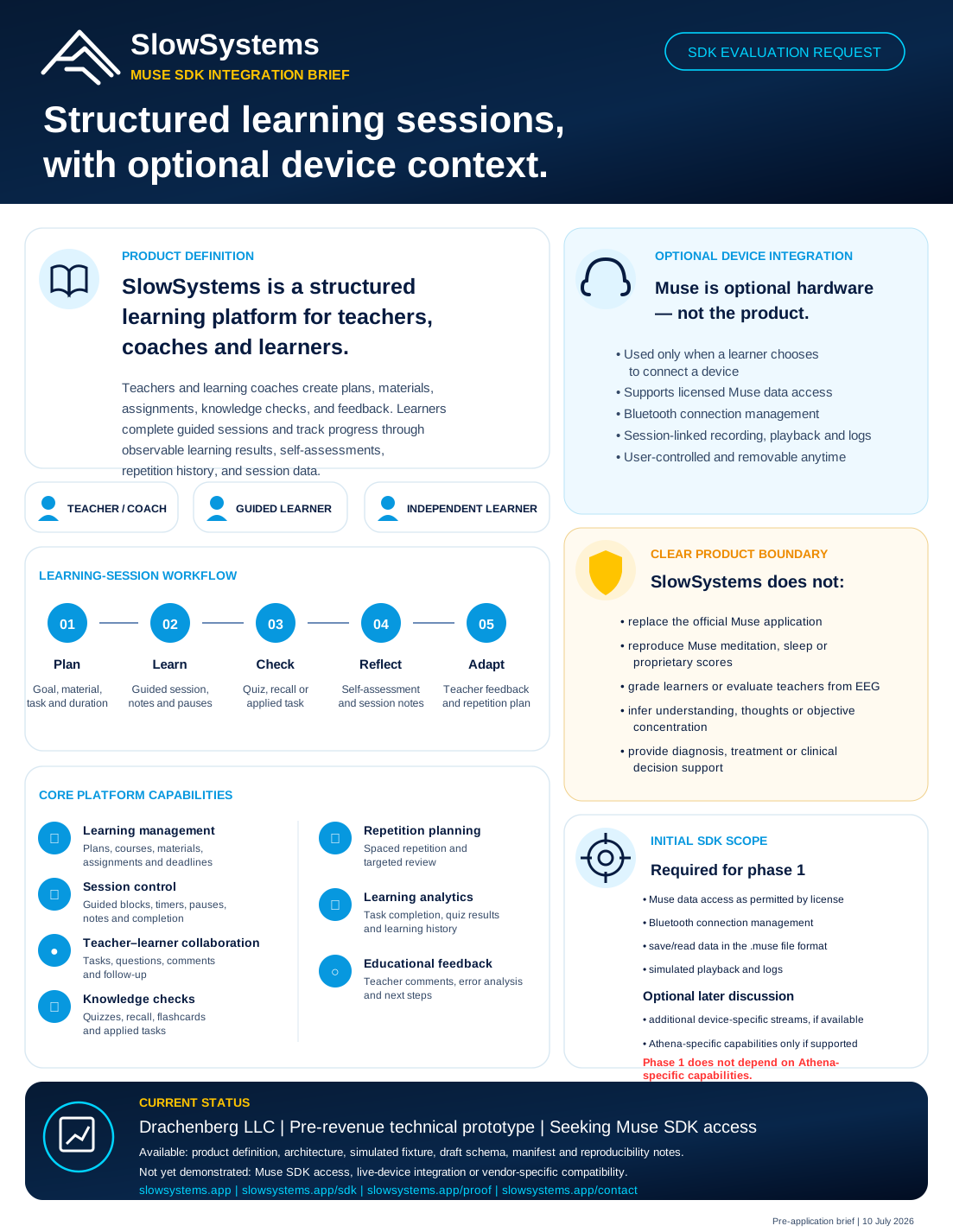
SlowSystems Muse SDK Integration Brief showing the learning-platform definition, optional device integration, product boundaries, workflow, capabilities, SDK scope, and project status.
Pre-application brief. No SDK approval, live-device runtime, or vendor compatibility is claimed.

Product workflow

Plan → Learn → Check → Reflect → Adapt.

Educational progress comes from completed work and human-readable learning evidence—not from a sensor-derived mental-state score.

01

Plan

Learning goal, material, task, duration, and knowledge check.

02

Learn

Guided session with tasks, notes, pauses, and questions.

03

Check

Quiz, recall, applied task, or completed work.

04

Reflect

Self-assessment, confidence, difficulty, and session notes.

05

Adapt

Teacher feedback, follow-up task, and repetition schedule.

Current product scope

The learning platform is the product.

Core functions

  • Learning management
  • Guided session control
  • Teacher–learner collaboration
  • Knowledge checks
  • Repetition planning
  • Learning analytics
  • Educational feedback

Optional device role

  • Connection and device status
  • Signal-quality information
  • Session timestamps
  • Recording continuity
  • Documented signal features
  • No automatic grading
  • No proprietary score reproduction

Explicit boundaries

What optional sensor data does not do.

No required hardware

Plans, sessions, quizzes, repetition, and feedback work without an EEG device.

No learning-state claim

The system does not claim to detect understanding, thoughts, intelligence, or objective concentration.

No manufacturer replacement

SlowSystems does not reproduce proprietary meditation, focus, sleep, recovery, or mental-fitness features.

No clinical use

The system does not provide diagnosis, treatment, therapy, or clinical decision support.

Technical fixture

session_feature_update — simulated data only.

The draft event records session phase, technical signal quality, and documented signal features. It contains no mental-state label and explicitly disables learning-outcome inference.

{
  "event_type": "session_feature_update",
  "session": {
    "phase": "guided_learning",
    "educational_use": "technical_context_only"
  },
  "signal_quality": {
    "status": "usable"
  },
  "learning_outcome_inference": false,
  "claim_boundary": "non_medical"
}

Related files: sample-run-001.json · session-feature-update.schema.json · review-manifest.json

Requested SDK scope

A small phase-one request.

Muse S Athena optics or fNIRS-related access is optional and not required for phase 1.

Priority
Capability
Purpose
Required
Permitted EEG data
Technical feature extraction during an optional learning session.
Required
Timestamps
Synchronize data with tasks, pauses, and markers.
Required
Connection status
Reliable session setup and interruption handling.
Required if available
Signal quality
Device-fit guidance and identification of unusable periods.
Development
Logging and playback
Repeatable integration testing.
Optional later
Athena optics / fNIRS
Separate feasibility evaluation; not a phase-one dependency.

Available now

Product and technical preparation.

  • Defined product model and learning workflow
  • Optional device boundary
  • Simulated fixture
  • Draft JSON Schema
  • Reviewer manifest
  • One-page reviewer brief

Not yet available

Evidence requiring approved access.

  • Official SDK implementation
  • Live-device runtime
  • Vendor-specific stream verification
  • Compatibility statement
  • Manufacturer approval or endorsement

Contact path

Discuss a learning pilot or commercial SDK integration.

Education collaboration and device-integration inquiries are separated in the contact form.